
Foraminal blockade.
A foraminal block is a medical procedure in which a medication (usually a local anesthetic and/or corticosteroid) is injected into the area where the spinal nerve exits through the intervertebral foramen (foraminal opening). This procedure is used to diagnose and treat pain syndromes associated with compression or inflammation of nerve roots.
Indications for foraminal blockade
-> Radiculopathy - pain caused by nerve root compression (e.g., herniated disc, spinal canal stenosis, or osteophytes).
-> Radicular syndrome - pain that irradiates along the course of the nerve (e.g., sciatica).
-> Chronic back or neck pain that cannot be treated conservatively.
-> Diagnosis of the source of pain - if the cause of the pain is unclear, a block can help determine if the pain is related to a specific nerve root.
-> Inflammation of the nerve root (e.g. spondyloarthritis).
Fig.1: MRI of the lumbar spine. Right-sided foraminal herniation of the intervertebral disc L4-L5 is visible.
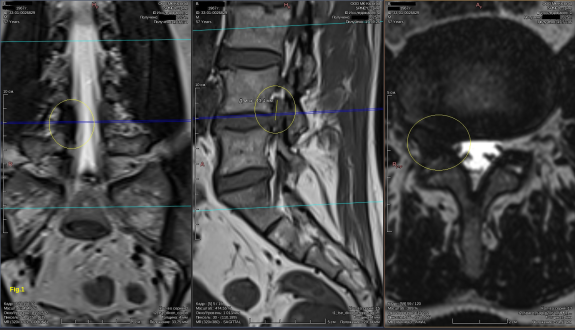
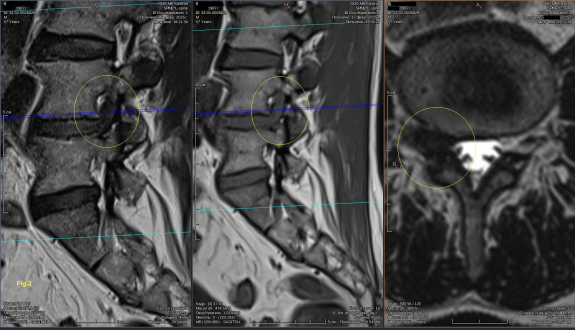
Fig.2: MRI of the lumbar spine. Right-sided foraminal herniation of the intervertebral disc L4-L5 is visible.
Method of execution
1. Preparation of the patient :
-> The patient is laid on the stomach or on the side (depending on the level of blockade).
-> The skin in the area of injection is treated with antiseptic.
-> Local anesthesia of the skin is used if necessary.
2. Control with imaging :
-> The procedure is performed under fluoroscopy (fluoroscopy) or computed tomography (CT) monitoring for precise needle insertion.
-> The physician determines the point of needle insertion by focusing on the anatomical structures.
Fig.3: Intraoperative photograph. Under fluoroscopy control, a needle was inserted into the area of the right foraminal foramen L4-L5.

3. Needle Insertion :
-> The needle is inserted through the skin and soft tissue until it reaches the foraminal opening.
-> Sometimes the position of the needle is confirmed with a contrast agent to make sure that the medicine will be delivered precisely to the nerve root.
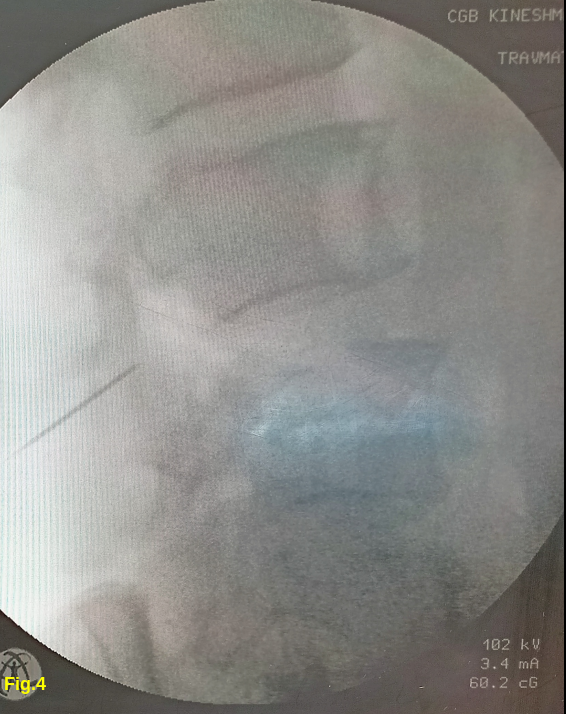
Fig.4: Intraoperative photograph. The needle is brought to the foraminal foramen of L4-L5.
4. Medication administration :
-> A mixture of local anesthetic (e.g., lidocaine or bupivacaine) and corticosteroid (e.g., dexamethasone or betamethasone) is administered.
-> The amount of drug administered depends on the localization and clinical situation.
5. Completion of the procedure :
-> The needle is withdrawn and the injection site is covered with a sterile dressing.
-> The patient is monitored for 30-60 minutes to control possible side effects.
Fig.5: After withdrawal of the needle, the injection site is covered with a sterile dressing.

Expected effects
Analgesia :
-> A local anesthetic provides quick but temporary pain relief (several hours).
-> A corticosteroid reduces inflammation and swelling around the nerve root, resulting in a longer lasting effect (days to weeks or months).
2. Diagnostic effect :
-> If the pain disappears after the blockade, it confirms that the source of pain is related to a specific nerve root.
3. Improvement of mobility :
-> The reduction of pain allows the patient to regain motor activity and begin rehabilitation.
4. Reduced need for systemic medications :
-> Foraminal blockade can reduce the need for pain medications such as opioids.
Possible complications
-> Infection at the injection site.
-> Bleeding or hematoma.
-> Damage to a nerve or blood vessel.
-> Allergic reaction to the medication.
-> Temporary increase in pain or numbness.
-> Rarely, systemic effects of corticosteroids (such as increased blood glucose levels).
Foraminal blockade is an effective method of treatment and diagnosis of pain syndromes associated with nerve root pathology. However, the decision to perform it is made by a doctor after a thorough examination and assessment of risks and benefits for the patient.
Neurosurgeon
Sergey Tikhomirov
https://sites.google.com/view/doctor-tikhomirov-s-e/telemedicine
WatsApp +79016852305
Telegram/Viber: +79519191113