
Moscow's Lower Presnya - factory workers' village built in late 1920s
Thank you for making it happen: K. T., H. W., T. B., m., M. B., O. B., S. R.

Presnya in Moscow was a district of factories since the 18th century. Some of the factories that were based here are the Prokhorov's textile factory (Tryokhgornaya Manufactura), Smith's boiler factory, Danilovsky sugar factory, Ossovetsky's chemical plants etc. Factory workers usually lived close by (some of the factory owners built housing, but not all) so there were a wide array of houses and buildings (some brick, some wooden). After the 1917 Revolution all of the factories were nationalised and workers' living situation rethinked.
Presnya was the first workers' village in Moscow rebuilt after the Revolution (began in 1926). Emerged a district of 4-floor brick houses in formations that created court yards (something that didn't really exist for apartment buildings before then). Court yards were there purely for comfort of the residents. The new buildings mostly consisted of standard sections of 2 or 4 flats per floor per entrance. The standartisation helped bring the costs down (the buildings themselves were all still different). Buildings stood far enough from each other to allow enough air and sunlight. Most of the flats had windows facing North and South - it helped with air flow and sanitation (tuberculosis and other diseases were on the rise, and having direct sunlight in the flat was detrimental for germs). Many of the flats (though not all) had kitchens and bathrooms. Every building had a built-in boiler room that provided heating in winter. Flats were equipped with their own boilers to cook and heat water. Some other "smart house" solutions in the flats: a pipe system that sent heated water from the kitched to the bathroom, oven-samovar connector (to simplify boiling a samovar), built-in "ice pantry" in the kitchen (served as a fridge in wintertime), air ducts in every room, floor air ducts that also served as water retractors and prevented flooding the neighbours downstairs.
It's important to note that while some families had a whole flat to themselves, most of them were kommunalkas [communal flats] with several families sharing one flat, one room per family. Typically, workers aged 40+ with big families were more likely to get their own flat that younger or unmarried workers.
Let's see some of the residential buildings!
First, some of the 19th century ones - originally built by factory owners as housing for workers.
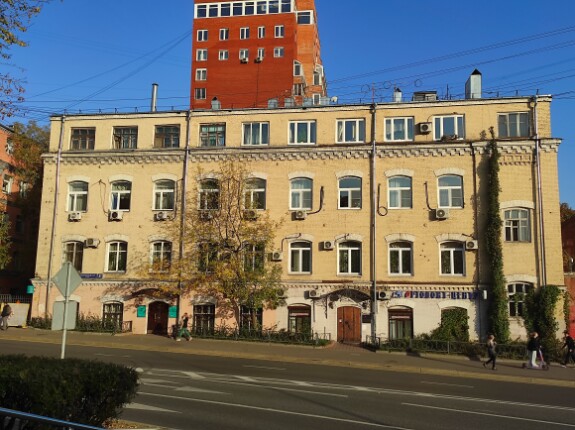


This new elite residence is built over three 19th cent. buildings. They tried to save as much as possible. The building on the left is mostly as is (only an extra floor was added on top), the building on the far right was kept as part of the facade, and the middle one was in too bad a condition to save, unfortunately.
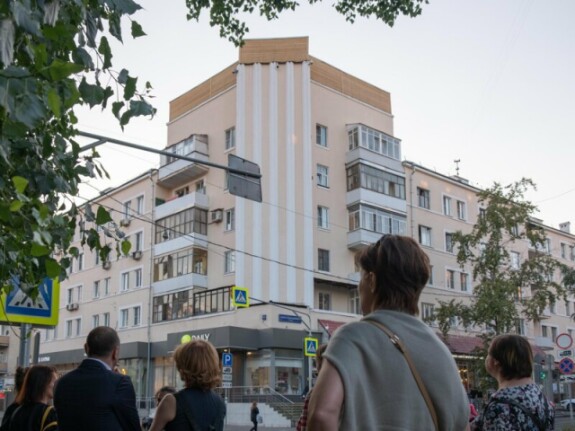
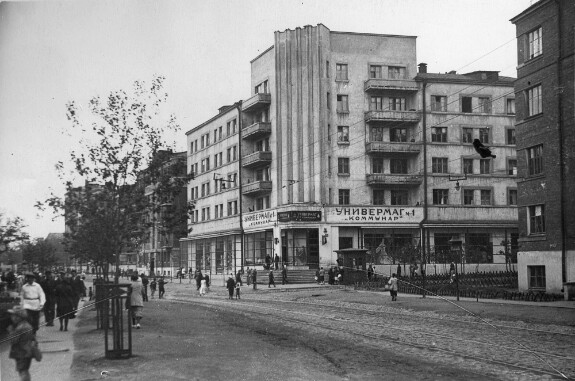
Corner house with the Kommunar store - designed by Aleksandr Kurovsky.

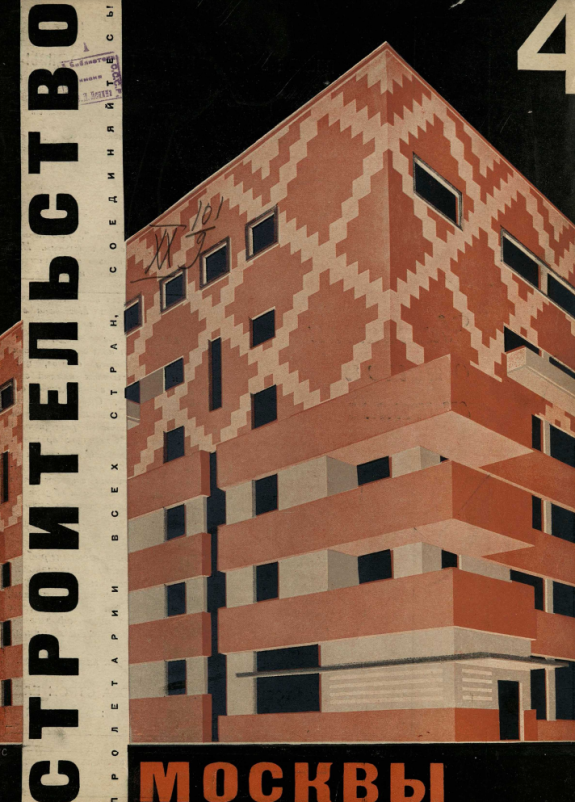
Another building designed by Kurovsky was initially supposed to have more balconies - see the project on the cover of Building Moscow (#4, 1929). Originally the colors were reversed: the building was made of red brick (befitting the red brick factory surroundings) and the patterns were made of lime brick.
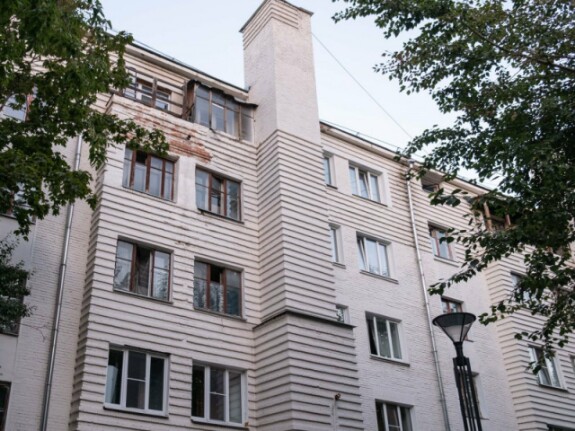
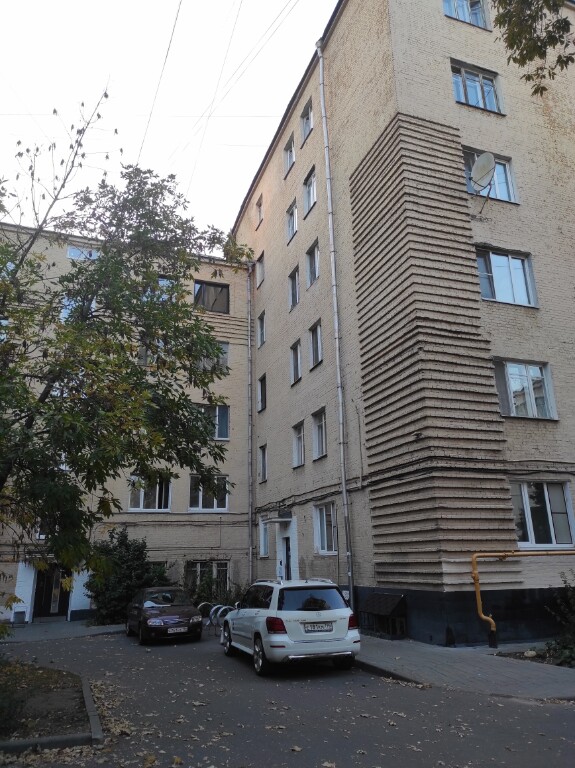
Pair of buildings designed by engineer Osvald Kapran are very simple but have a distinct feature.


And finally the architectural dominant of the Lower Presnya - Mostorg [Moscow Trade] department store designed by Brothers Vesnin and built in 1928. It was their first constructivist building in Moscow. This was the first and only store of this magnitute in the district, a symbol of the new centralised trade as opposed to old style markets.
moscow

