
From everyday life through occultism to the philosophical vision of the World.

Empty "capacious" concepts
Modern reality, like any other era, dictates its own character, rhythm and understanding. Using a primitive comparison of the influence of patterns and stereotypes that are constantly announced to a person in his social life, we can imagine the principle of operation of an advertising megaphone in a supermarket, where a person purchases daily and necessary products to support his life: rejection of the intrusiveness of the sounds of the megaphone while purchasing goods is replaced by humility and faith with side of a person into an advertisement spoken through a radio horn. The individual has no chance of resisting the information received through the mouthpiece due to the fact that he is busy with the question of his survival, moving between the rows of a huge number of “necessary” and advertised goods and being completely involved in the purchasing process. So a person is less and less critical of advertising announced through a megaphone because, on the one hand, being in a store, it becomes so familiar and familiar, on the other hand, the store “presses” on tired human shoulders with the dictates of its monopoly, forcing a person to purchase things here and now, the need for which is often formed in the minds of the buyer solely by advertising propaganda.
Such an analogy reveals a person’s attitude to the cognitive process. Preoccupied with questions of survival and being in the midst of a bombardment of propaganda of various origins, a person experiences exhaustion on the physical, mental and material planes. Education and cognition, being demanding on human resources, are used less and less in everyday life, and human consciousness is increasingly giving way to prejudices, stereotypes and categories, the meaning of which was conveyed through the information mouthpiece of the supermarket. A person loses the desire, time and energy for the most important thing - training attentiveness and intelligibility, as well as increasing critical perception of reality.
Going about everyday life and worries, a person, without knowing it, encounters every minute in his life such concepts as “occultism” and “philosophy”, the understanding of which is dictated to him by widespread stereotypes, and the semantic meaning is conveyed through various kinds of low-quality information sources and television shows . Being, from the point of view of philosophy, the Secret and Cognitive center of his own life, consisting of body, soul and spirit, a person open to the process of cognition limits his educational and cognitive abilities exclusively to scientific methods of comprehending and describing the surrounding reality. This is logical, because the desire for such a perception in an individual is cultivated from childhood and is called a rational approach to life. Depending on the circumstances, a person's personal abilities and his tendency to discriminately search, scientific methods can be restrictive in terms of ignoring data that does not fit into the usual picture of the world.
Through a biased attitude and parochialism of perception, fatigue from false beliefs and an incomplete descriptive picture of the world comes into human life, leading the individual to a wasteful and ineffective life from the point of view of using his own resources to develop the common good throughout the human family. Understanding must come with clarity, which reveals the true deep meanings of habitual and familiar categories on which a person relies in the process of his life, and which drive a person as a complex structure capable of creating and creating.

"Occultism" and "philosophy" are everyday concepts of ordinary human life
The 20th century philosopher and occultist Manly Palmer Hall said that the process of human learning should be built on three unshakable foundations: science, philosophy and religion. The first acts as a tool and platform for collecting data about the world, the second area is expressed in the descriptive ability of the data obtained, the third area explains to a person the emergence of his cognitive tendencies.
The listed three capacious categories do not represent three different concepts of different nature, but represent three different aspects of the concept of one nature - the process of cognition.
The modern tendency towards knowledge in people mainly manifests itself in three forms:
— Commitment to science as an unshakable educational force, the correctness and truth of which cannot be criticized, with absolute faith in the ideals and values it promotes, as well as in the model of human development, which is at the “evolutionary peak” of development, ignoring philosophical and religious methods of knowledge;
— Complete infantilism in the material sphere of life, inability and inconsistency in solving ordinary everyday issues, under the pretext of their insignificance, adherence to dangerous uncertainty in the understanding of “spirituality”, “esotericism”, “the divine principle in man”, ignoring the scientific method of knowledge;
— Indifference and lack of interest in realizing and accepting the need to form a clear cognitive vector in one’s own life.
Philosophy in the broadest sense says that a person’s cognitive ability is revealed when he is guided by the three aspects of cognition described above. Human evolution is manifested in the individual's ability to recognize himself as body, soul and spirit and the ability to establish connections between these three aspects of his conscious nature.
Occultism is a capacious concept that includes scientific, philosophical and religious methods of knowledge and is closest to the widespread in consciousness, but outdated concept of “natural science”. Thus, occultism considers human everyday life as a sphere and platform for the interaction of the three listed aspects of cognition and studies human life and human interaction with nature in scientific, philosophical and religious contexts. The concept of occultism represents the deepest understanding of human research abilities and the tools of knowledge available to him, as well as the compilation of the most extensive and capacious descriptive model of the world, which dissolves and becomes intangible in the case of artificial dominance of one of the three aspects of knowledge over the other two.
Philosophy in the broadest sense is not only one of the three cognitive aspects or a separate science, but also the general name of the entire process of cognition of the world, which leads to the study of the laws of nature with the help of occultism, which is a more capacious concept in comparison with the modern definition of science, of which the latter originates.
The everyday, scientific and spiritual life of a person constitutes the parts that lead a person to the “philosophical life” - the perception and study of the secrets of human nature and their reflection in the secrets of Nature.
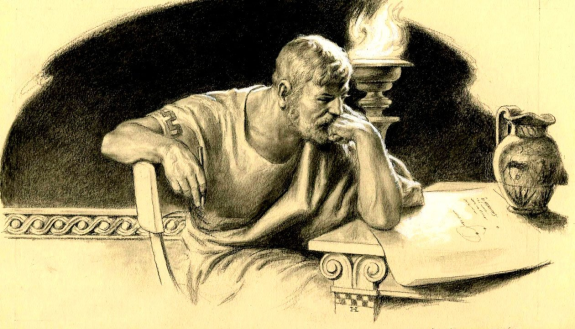
Definition of occultism and philosophy by initiates of the mysteries
One of the definitions of occultism represents this concept as a set of secret sciences, in the sense that it includes methods of knowledge of nature that are not yet recognized or ignored by official science.
Mahatmas, Teachers of humanity, representing the Brotherhood, which, according to some sources, is located in the Himalayas, engaged in the education of all mankind, define occultism as knowledge leading to practical benefit and benefit for all mankind.
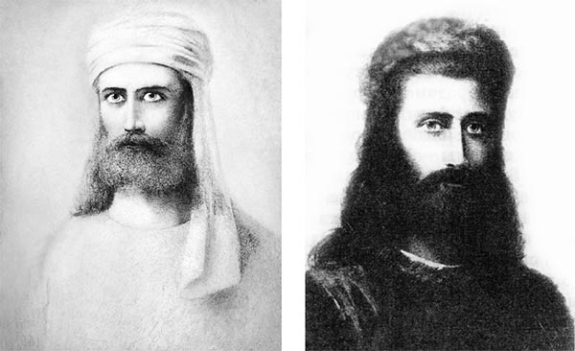
Mahatma Moriah and Koot Hoomi
In their letters to representatives of the British intelligentsia in the 19th century, collected in the work “Letters of the Mahatmas,” the Mahatmas write the following about the occult:
The truths and secrets of occultism represent a body of the highest spiritual knowledge, deep and at the same time practical for the whole world. However, they are given to you not only as a mere addition to the tangled mass of theories or speculations in the world of science, but for their practical significance in the interests of mankind.
The terms “unscientific”, “impossible”, “hallucination”, “deceiver” have hitherto been used very loosely and casually, implying something hidden, abnormal or deliberate deception in occult phenomena. And this is why our Leaders have determined to throw upon a few receptive minds more light on this subject, and to prove to them that such manifestations are as much subject to laws as the simplest phenomena of the physical world.
Fools say, “The age of miracles is past,” but we answer, “It never existed!”
Several thoughts follow from the above.
— Occultism describes phenomena that modern science has not yet described, but which are as much a part of nature as those phenomena that are dealt with by traditional scientific knowledge;
— Scientific and occult phenomena are based on established laws that describe the nature of the former. The scientific approach of study in the broadest sense is essentially the same as the occult approach, and represents the part of it known and studied by mankind;
— True occultism works for the benefit and enlightenment of all humanity and has nothing to do with human stereotypes and the prejudices generated by them;
— The age of miracles, by which people understand trickery or inexplicable facts, never existed. In contrast to this, there has always been an era of precise Knowledge.
The Mahatmas write the following about the difficulty of teaching occult sciences even to a mind prepared for this:
You ask us to teach you the true science - the occult aspect of a certain side of Nature; and you believe that doing it is as easy as asking for it. You do not seem to realize the enormous difficulties that exist in the way of transmitting even the elementary rudiments of our science to those who have been taught by the methods you are accustomed to.
You really do not understand that the more you have knowledge of one kind, the less you are able to instinctively understand knowledge of another kind, because the thought of a person usually rushes along the usual rut, and unless he has the courage to fill up what is missing and pave the way new paths for himself, he will, willy-nilly, have to move along the beaten paths.
At the same time, the Mahatmas do not separate physical and metaphysical sciences, emphasizing the only criterion for the truth of their methods - moral results and benefits for humanity.
Mr. Tyndall places the metaphysical sciences, which, as you know, cannot be tested before a heterogeneous public, on a par with poetic creativity. On the other hand, realistic science, based on facts, is purely prosaic. But for us, poor unknown philanthropists, any fact of both those and other sciences is interesting only to the extent that it can potentially bring moral results and benefits to humanity. And what could be more indifferent to everyone and everything in its splendid isolation and more connected with exclusively egoistic needs in its dissemination than the materialistic and realistic science of facts?
Let me ask, without being accused of empty "judgment of science": what do the laws of Faraday, Tyndall and others have to do with philanthropy, taken in its abstract relation to humanity, considered as a composite whole? What do they give to man as an individual atom of this great and harmonious whole, even if they can sometimes bring practical benefit to this atom?
The Mahatmas also mention the acquired totalitarianism of the figures of traditional scientific knowledge:
Cosmic energy is something eternal and continuous; matter is indestructible, and scientific facts confirm this. Doubt them and you are ignorant; deny them - and you are a dangerous madman, a fanatic; refer to the improvement of theories - and you are an arrogant charlatan.
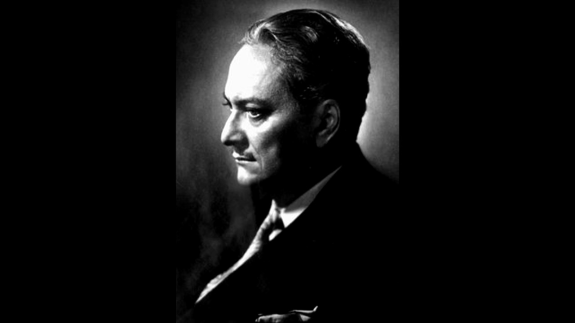
Manly Palmer Hall
20th century occultist, educator and philosopher Manly Palmer Hall writes:
Briefly stated, the true purpose of ancient philosophy is to discover a method by which the process of development of rational nature can be accelerated, instead of waiting for the slower process to follow the will of nature. The words “philosophical life” hide the highest source of strength, the achievement of knowledge, the revelation of God within us. This is the key to the Great Work, the mystery of the philosopher's stone, because it means that the alchemical transformation is complete. Thus, ancient philosophy was first and foremost a way of life, and only secondarily an intellectual method...
...Hence, a great philosopher is one who leads a threefold life - physical, spiritual and mental, and all these aspects are permeated with rationality and are completely subordinated to it.
Hall considers the concept of “philosophy” in the broadest sense of the word, suggesting that the philosophical method of cognition is the only method of revealing the secrets of the connection between man and the world, as well as man’s understanding of his own evolutionary path. M.P. Hall also connects philosophy with the development of the greatness of any nation. There he writes:
Anyone who feels at least partially the nobility of life cannot fail to understand the superficial nature of activity in the present age. There is a beautiful expression: one person cannot succeed until he develops his own philosophy. No people can achieve true greatness until it has developed an adequate philosophy and pursued policies consistent with that philosophy.
Hall writes that according to the Platonists, there were two types of ignorance: simple and complex. The first was small and consisted of a lack of knowledge. In essence, small ignorance is an ever-acting process that guides the human soul in the search for knowledge. Great ignorance or “ignorance of ignorance” consists in a person accepting his isolation from nature as truth, as well as accepting the truth and completeness of his knowledge. In such ignorance, a person does not question the methods of his knowledge, and also does not see the point in a critical revision of accumulated knowledge, which would allow a person to continue his cognitive movement from small to large boundaries. The reluctance to leave the familiar limits of knowledge expresses a person’s isolation, leading him to a false sense of the integrity of the picture of reality perception. It is philosophy, according to Hall, that is designed to lead a person to such integrity, paving the way from the heterogeneity and incompleteness of his knowledge to homogeneity and depth.
Interesting in this context is the mention of knowledge described in the books of the mysterious and mystical author of the twentieth century, Carlos Castaneda.
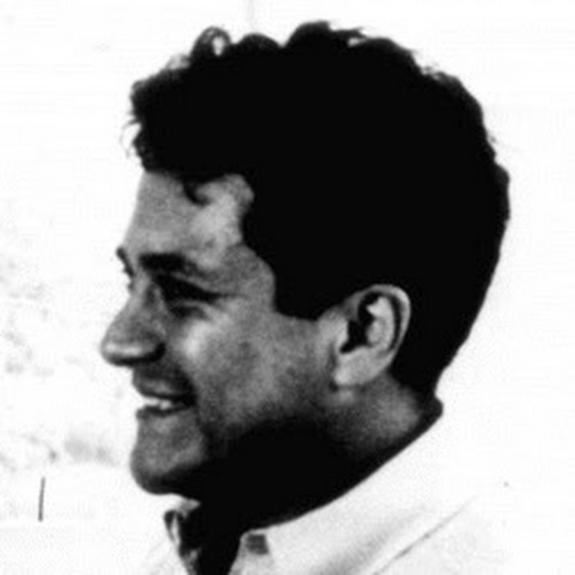
One of the rare photographs of C. Castaneda
In his writings, Castaneda describes three spheres of human perception, which his teacher, a shaman from the Yaqui tribe, don Juan, told him about. According to the knowledge of the shamans of Mexico, human perception was divided into three components:
— The known (tonal, first attention), the area with which a person deals in everyday life;
— The unknown (nagual, second attention), the area that reveals a person's perception completely within the framework of what a person can be according to his nature;
— Unknowable (third attention), the area of cognition that lies beyond the capabilities of the human form, allowing a person to perceive manifestations of the world that lie beyond the reach of man.
According to don Juan, the magicians of Ancient Mexico, mired in endless rituals and the development of manipulation of other people's consciousness, disappeared as a species, because they worked, unlike the new seers, in the field of only two attentions - the first and second. In other words, they perceived the world only from the perspective of perception accessible to the human form, thereby ignoring the part of the world that is beyond the comprehension of man as a species. This is how, according to don Juan, the isolated perception of the magicians of Ancient Mexico and their egocentrism, inflated to incredible proportions, were manifested.
Returning to Hall's esoteric definition of the concept, he calls philosophy the only hope of the world. In his opinion, all the sorrows of modern life occur due to the lack of proper philosophical laws in its foundation. At the same time, philosophy reveals the full human potential, providing the entire possible range of perception and tools for understanding the world, scaling human consciousness to the categories of energy, celestial bodies and Space, returning to the individual a sense of integrity during the cognitive journey and allowing one to look beyond the boundaries of physical life. There Hall writes:
Philosophy reveals to man his relationship with the universal. She shows him that he is a brother to the suns that are located in the firmament. It elevates him from the status of a taxpayer on a spinning atom to the status of a citizen of space. She teaches him that while physical bonds bind him to the earth (of which he himself is flesh and blood), he has a spiritual power, a divine self, through which he becomes part of the symphony of the Whole.
Ignorance of ignorance means a self-satisfied state of unawareness in which a person knows nothing that goes beyond his physical senses and says that there is nothing unknown! Anyone who does not know life other than the physical is simply ignorant. But he who proclaims physical life to be the most important and elevates it to the status of the highest reality is ignorant of his ignorance...
...Philosophy will lead all people onto the wide, calm road of truth, because the world of philosophy is a peaceful land where all the subtle properties with which the soul is endowed find the opportunity for their expression...
...Philosophy helps man to develop intuition, because it reveals the glory and sufficiency of knowledge, because it develops those hidden powers and abilities through which man is able to master the secrets of the seven spheres...
...Philosophy is that magical power which, by splitting a clay vessel, frees the soul from the bonds of habit and perversion. The soul can spread its wings and ascend to its source.
Conclusion
Man, being a magical being due to his cognitive ability, resides in a world of stereotypes and patterns that prevent him from clearly and fully perceiving the surrounding reality. Based on false ideas, the individual limits his perception to the everyday side of life, depriving it of its essence, and depriving himself of the miracle of transformation from an ordinary layman into a philosopher-researcher, inspired by the depth of knowledge of the secrets of Nature.
“Occultism” and “philosophy” are the foundations of any human life, regardless of the desire to accept and recognize such a fact as its owner. The more clearly a person realizes the connection of his life with the consciousness and constructiveness of his own thinking, the greater his chances of freeing himself from the shackles of indifference and misunderstanding of life, which flows through and connects human nature with the entire Universe.

castaneda
philosophy
hall
blavatsky

Geoff.
Outstanding article. Thank you for investing the time in writing it. I had never heard of the Mahatmas before this article. Is there an additional resource you can recommend that I may use to learn more about these people?
Nov 30 2023 06:57 (changed)

Three Suns
Geoff., hello. Try this https://theosophy.wiki/en/Mahatma_Letter_No._1 and https://theosophy.wiki/en/Main_Page
Nov 30 2023 11:35 
1


