
The Language of Diplomacy or the Language of Revenge?
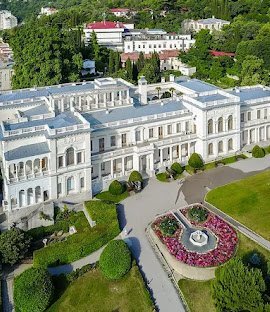
I recently did something I hadn't done in years: I took the family on a holiday trip. We boarded a train in St. Petersburg and 34 hours later we were in Simferopol, Crimea. A tour bus then took us across the coastal mountain range to Yalta, where we spent an entire week hiking in the mountains and visiting nearby royal palaces which had survived World War II intact with all of the furnishings and the landscaping because the invading Germans first wanted to claim them for themselves and then didn't have time to mine them before being driven out by the Red Army.
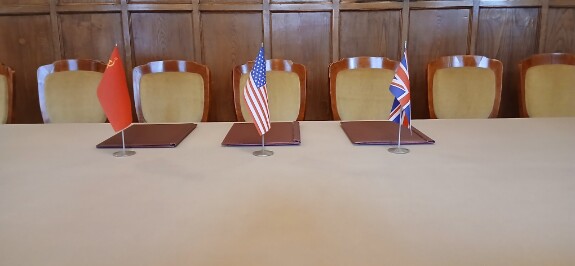
One of these palaces, in Livadia, was where the post-war Yalta conference was held by Stalin, Rosevelt and Churchill. At that conference, lots of details of post-war Europe were sorted out and signed into international law, allowing the great powers of the US and the USSR to keep the peace throughout the rest of the century. (Heavens only knows why that old drunk Churchill was even invited, since by then Britain was no longer a world power.)
It is hard to imagine that such a conference, including contemporary American or European leaders, could be held today. None of them seem the least bit capable of diplomacy — certainly not Trump and certainly not any of the political midgets currently in charge throughout Europe. Trump recently made himself hoarse by yelling at Iranians over the phone. That is not the language of diplomacy, which must be quiet, thoughtful and respectful. And this is sad indeed, because diplomacy and international law are the only mechanisms that humanity has been able to evolve to avoid endless, mindless slaughter.
Let us go back in time to where it all started: in autumn of 1648, in Münster. In a hall smelling of wax and mildew, papers were signed. The war had lasted thirty years. Those who were young when it had started were by then old and gray. Those who had believed that God was on their side had seen God disappear in the smoke rising from their burning towns and villages.
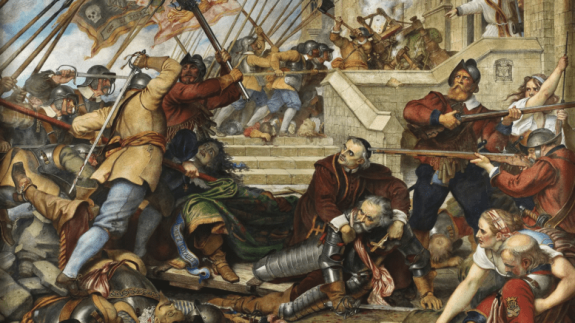
Germany had lost half of its population. Wolves roamed the streets of cities where only yesterday bells had rung from belfries. Soldiers, unable to remember any life other than war, didn't know where to go or what to do.
The diplomats signed papers. They had come to understand something essential: a war in which the enemy is treated not as a man but as the Devil devours all those who started it. A king who is treated as a legitimate target ceases to be a king. He becomes cannon fodder. This lesson had cost three million lives. Europe had paid for it in blood; enough blood had been shed for Europe to remember the lessons for almost four centuries.
The lessons were all simple. Killing kings is stupid because corpses can't capitulate. Mistreating emissaries is worse than a crime — it is a mistake! Who would you then sign peace treaties with? A war without end is a defeat for both sides. That is why the victors must spare the vanquished, and their families. The vanquished must be given the opportunity to surrender with dignity, otherwise they will fight to the death — theirs and yours both. Negotiators must be inviolable: one act of disrespect toward an ambassador is a prelude to a hundred years of murder. Neutral countries must be left alone: unnecessary enemies automatically produce unnecessary graves for your own soldiers. This isn't morality — it is engineering. As in chess, the king must remain the king, even after losing the game. Burning down the chessboard is never a good option.
But three centuries later, in 1945, Europe was in ruins once again. This time, there were 50 million dead. Ruined cities smelled of smoke. The war lasted for just six years, but killed many more people than the Thirty Years' War because of improvements in killing technology.
At Nuremberg, the vanquished were judged — not for losing, mind you, but for not playing by the rules. There followed forty years of the Cold War, complete with missiles aimed at each other, hotlines, arms limitation treaties... The warring sides did not dare to fire on each other or to provoke the other side to the point of firing because they remembered the lessons: a shooting war does not lead to victory. It leads to a pile of ashes. This system worked not because everyone agreed with it or liked it, but because violating its rules was much more expensive than compliance.
But then the USSR left the game. There followed three and a half decades of impunity and three and a half decades of mayhem. A few months ago Iranian representatives attempted to negotiate in good faith; they were then killed by an air strike. The Iranians regrouped and sent in new representatives; they are now dead too. People in the West take in this sort of news with their morning coffee, not understanding what they have just read. Oil is up and that's bad, they think. It doesn't occur to them that they are some kind of dead too. They think that impunity is now the norm. There was Kosovo, then Iraq, Afghanistan, Syria, Libya... and now Iran. And nothing happened, right? Something did happen — just not to them yet. Nobody in the West remembers Münster and the Thirty Year War. No one thinks about how a king who becomes a target ceases to be a king. That the loser, left with no way out, will fight to the last. That a negotiator, once betrayed, will never negotiate again.
Imagine a soldier from the Thirty Years' War. He doesn't know what he is fighting for. He only knows that his village was burned down, his family is gone, and the enemy is everywhere. He expects no mercy from anyone and he will give no mercy to anyone. Now imagine a world where there are millions of such soldiers, where every man on the losing side is a suicide bomber and where every attempt to get the situation under control only multiplies the numbers of the enemy because there is no trust and no one left who is neutral. This is not some sort of forecast; this is just the well forgotten past which is, inevitably, going to come back.
There are 90 million people in Iran and they know how to wait. They have allies among the 300 million Shia Moslems and they have prepositioned infrastructure in countries whose names you've heard on television. They no longer have reasons to negotiate. They have only reasons for revenge. When revenge becomes the only language spoken, perhaps it will be time to remember Münster and the diplomats who signed a peace treaty because they understood: a game without rules is a game without winners.
This is a beautiful bit of writing.
Please make it free so it may be circulated.
This is the highest compliment I can give it.