
How to find optimal point of contact between the tongue and the reed
As I wrote above, I initially used "anchor tonguing" without much success. Later, I retrained myself to a method in which the very tip of the tongue touches the reed just below its tip, literally about one millimeter from the edge of the reed.
Although this approach was much better for me than "anchor tonguing", it still had some drawbacks. At times, I would miss the tip of the reed, and playing in the highest register became quite difficult. Eventually, I concluded that the most comfortable and reliable solution for me is when approximately five millimeters at the tip of the tongue touch approximately five millimeters at the tip of the reed, or at least when it feels that way.

To develop sensitivity and a clear understanding of where the tip of the reed is actually located inside the mouth, two exercises can be used.
1. Licking the reed
Insert the mouthpiece into the mouth as usual and form the embouchure. Touch the very bottom of the reed near the lower lip with the tip of the tongue, and then slide the tongue upward along the reed to the very tip several times. On the final repetition, keep the tip of the tongue at the extreme position on the tip of the reed and try to memorize where exactly the tip of the mouthpiece and the reed are located inside the mouth.
I have noticed that sometimes my awareness places the tip of the reed lower than it actually is. As a result, I articulate lower on the reed, and my articulation becomes less clear.
2. Lowering the reed
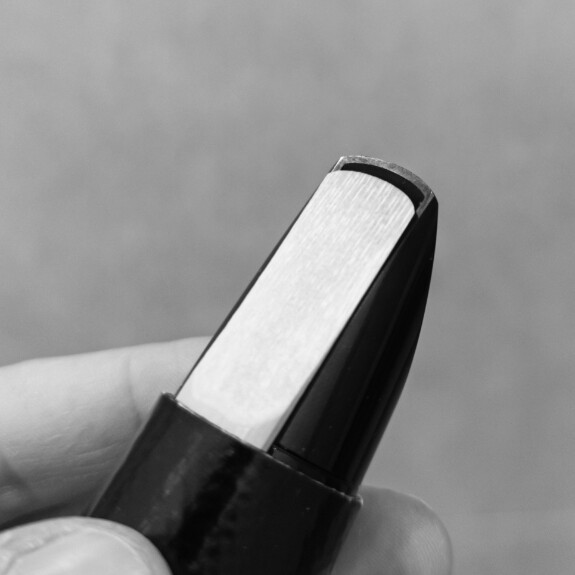
Lower the reed so that an opening of approximately five millimeters is created at the top. Insert the mouthpiece into the mouth and begin to play any piece using articulation, or simply pronounce “tu-tu-tu” (or “tyu-tyu-tyu”, “ti-ti-ti”, and so on), touching the opening with the tip of the tongue. This will help you understand where the tip of the reed is located.
By the way, practicing with the reed in this position is a good way to work on the clarinet without worrying about disturbing your neighbors. When the reed is positioned low, instead of a tone, you will only hear the sound of air. It is a useful exercise for finger technique, breathing, and articulation.