
The Unwritten Concrete: Why a Local Private Guide Is Indispensable for a Communist Tour of Kraków
You can stand in the center of Nowa Huta, stare at the vast Central Square, and read a plaque about the Lenin Steelworks tour. You will see the grey apartment blocks, the wide, windswept avenues, and perhaps the iconic "Ark of the Lord" church rising defiantly in the distance. But what you will not see are the ghosts of the queues, the whispered prayers, or the fear that hung in the stairwells. To truly understand communist-era Kraków—and especially its socialist twin, Nowa Huta—you need more than a map and a history book. You need a local private guide. Here is why.
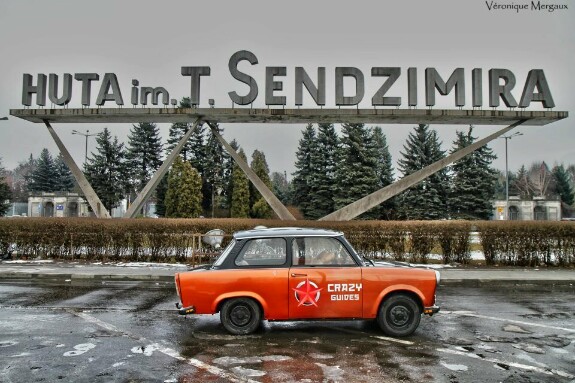
First, a private guide transforms abstract history into living memory. The communist era in Poland (1945–1989) is not ancient history; it is the recent past. Many private guides in Kraków are either children or grandchildren of the generation that built Nowa Huta with their own hands. Some remember the taste of rationed bread, the sound of a neighbor being taken away by the secret police (the UB/SB), or the electric thrill of a papal visit that defied the regime. A group tour bus will drop you at a monument and recite dates—1949, 1956, 1981, 1989. A private guide will stand beside you and say, "My grandmother lived in that block. She walked an hour each way to work at the steelworks. And she never stopped going to Mass." That personal connection turns cold concrete into a warm, painful, and profoundly human story.
Second, a private guide offers access to the hidden layers of the city that no official tour can reach. The grand narrative of communism is written in boulevards and statues. But the real story is written in the cracks. A good local guide knows the unmarked doorway that leads to a preserved communist-era apartment, still furnished with the original 1950s furniture and the ever-present portrait of Lenin. They can walk you into a courtyard where the original wells and outhouses still stand—a reminder that Nowa Huta was built on farmland, and that many of its first residents lived without indoor plumbing while being told they were building a utopia. They can show you the tiny, hidden crosses carved into doorframes by faithful residents who refused to let the "Town Without God" erase their beliefs. Without a guide, these details are invisible. With a guide, they become the entire point.
Third, a private guide provides the crucial, nuanced context that textbooks often flatten. Was life in communist Kraków only misery and oppression? The honest answer is more complicated. A good guide will not simply recite anti-communist slogans; they will explain the paradoxes. They will tell you that while the regime banned religion, it also guaranteed a job and an apartment—something many rural migrants had never experienced. They will explain why some older residents still speak of the "lost stability" of the PRL (Polish People's Republic) era, even as they celebrate its fall. They will point out the socialist realist architecture and explain how Polish architects subtly smuggled in Renaissance and Baroque details as an act of quiet national defiance. This is the uncomfortable, layered truth that a scripted tour avoids but a private conversation embraces.
Fourth, and perhaps most importantly, a private guide offers flexibility and depth that a group tour cannot match. Are you fascinated by the role of the Catholic Church in resisting communism? Your guide can spend an hour at the Lord's Ark Church, explaining exactly how Cardinal Wojtyła (later Pope John Paul II) outmaneuvered the secret police. Are you more interested in daily life—the shortages, the black market, the fashion of the 1970s? Your guide can pivot instantly, showing you where the queues formed and what people traded on the "Polish flea market." You are not herded along a fixed route; you are engaged in a dialogue.
Finally, there is the matter of safety and respect. Some communist-era sites—former prison cells, execution walls, memorials to the victims of martial law—are emotionally heavy. A local guide knows how to navigate these spaces with dignity, when to speak, and when to fall silent. They are not just a narrator; they are a respectful companion through a painful chapter of their own country's history.
In short, the grey blocks of Nowa Huta tour will not explain themselves. They stand as a silent, stubborn monument to a failed ideology. To hear the laughter, the prayers, the whispered jokes, and the quiet tears that echo within them, you need a local who carries that echo in their own voice. Hiring a private guide for a communist tour of Kraków is not an extra expense. It is the difference between seeing a ghost town and understanding why the ghosts still sing.