
Decadence of the second skin.. The tenth anniversary of Collection no.3

Decadence of the second skin.
Fabric analysis and how texture relates to form.
Form follows body oppression.
I do not have any relation to the gothic style.
I work with the dead part of the human body.
Ten years later, this is the only note I could find about my third collection. At such moments, you feel more like an archaeologist trying to decipher what you saw from the crumbs that remain. Back then, I didn’t keep such meticulous records, didn’t pay due attention to the sources of inspiration and their preservation, so now, as I run a blog here on Boosty, I understand the full importance of this and am already reaping the benefits. I was young, and I was in the moment, in the creative fervor typical of youth, without thinking about the future. But now, as I try to trace the remnants of the source of my work back then, I discovered a curious fact: many of the phenomena and concepts that I freely use today were already clearly visible back then. All those writings from the 19th century, with their unquenchable mood of hopelessness, melancholy, despair, and the aestheticization of death, the search for beauty in decay and withering. To a large extent, and perhaps even in the majority of cases, these moods still play a significant role and are more relevant than ever in the current conditions..
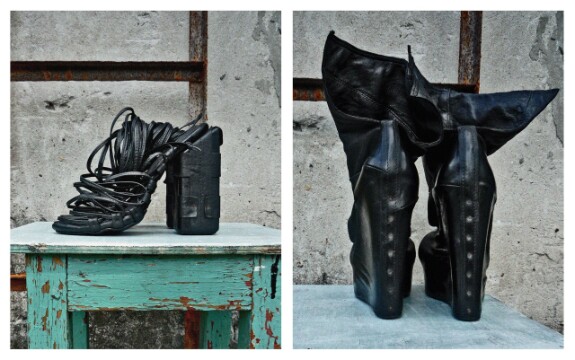
Returning directly to the project, this collection consisted of one‑of‑a‑kind items made from the leather of vintage jackets that I bought online. I was deeply immersed in studying the human body, the dead body. I watched and read everything that was available at the time about thanatopraxy (mortuary science and embalming) and even visited a morgue a couple of times. I remember that the design code of this work was largely a continuation of the previous Collection No.2 - this is evident, for example, from the crosses on the heels. But since I missed the ten‑year anniversary of my second collection last year, I still have to fully explore the scope of this work, which, fortunately, I still remember clearly. Because it was the first one to originate from a book, and since this approach is still fundamental to me and this piece remains one of the most significant for me, I will definitely have something to say. But perhaps I’ll wait until my fifteen‑year anniversary to fully reveal my second major work, which in many ways became a turning point and a starting point for me when I was 22.
collection no.3
