
What Is the Process of Solar Power? A Complete Step-by-Step Explanation for Homeowners
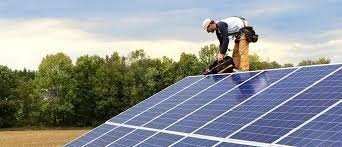
Millions of California homeowners have solar systems on their roofs, but far fewer can clearly answer the question: what is the process of solar power? Understanding how sunlight becomes usable electricity, and what happens to that electricity once it is produced, helps homeowners make smarter decisions about system design, troubleshooting, and upgrades. Here is a clear, step-by-step explanation of how the entire process works from sunlight to your light switch.
Step 1 — Photons Strike the Solar Panel
The process begins when photons, tiny packets of energy within sunlight, strike the surface of a solar panel. Each panel is made up of many individual photovoltaic (PV) cells, most commonly manufactured from silicon. Silicon has a unique property: when struck by photons, its electrons are knocked loose from their atoms, beginning to flow as an electrical current.
Step 2 — The Photovoltaic Effect Creates DC Electricity
Each PV cell contains two layers of silicon with different electrical charges — one positive and one negative. This junction creates an internal electric field. When the freed electrons flow across this junction under the influence of the field, they produce direct current (DC) electricity. Individual cells produce small amounts of current, but when dozens of cells are connected within a single panel, and multiple panels are connected in an array, the combined output becomes substantial.
Step 3 — The Inverter Converts DC to AC
The answer to what is the process of solar power? necessarily includes the inverter, because your home does not run on DC electricity. Virtually all household appliances, lighting, and electronics operate on alternating current (AC). The solar inverter is the device that takes the DC electricity from your panels and converts it into the AC electricity your home uses. This conversion happens continuously and automatically whenever your system is producing power.
Step 4 — Electricity Powers Your Home
Once converted to AC electricity, the power flows from the inverter into your home's electrical panel, where it is distributed to circuits throughout the house. Your appliances, lighting, heating and cooling systems, and electronics draw from this supply just as they would from grid electricity. The key difference is that during peak sun hours, you are drawing from free electricity generated on your own roof.
Step 5 — Surplus Energy Goes to the Grid or Battery
When your solar system is producing more electricity than your home is consuming — which happens frequently on sunny days in California — the surplus flows in one of two directions. If you have a battery storage system, excess energy charges the battery for use later. If you are grid-tied without storage, the surplus flows back to the utility grid, earning you net energy metering credits that offset your electricity bill.
At Simply Solar, system designs account for all stages of this process — panel placement, inverter selection, battery integration, and utility interconnection — to ensure that every kilowatt your system produces is captured and used as efficiently as possible.
Step 6 — Monitoring Tracks the Whole Process
Modern solar systems come with monitoring platforms that track energy production and consumption in real time. This data lets you verify that what is the process of solar power? is working exactly as designed. If any stage of the process, from panel output to inverter conversion underperforms, monitoring data captures it immediately, allowing for fast diagnosis and repair before significant energy losses accumulate.
what is the process of solar power?